How Florists Use Color Theory in Birthday Arrangements
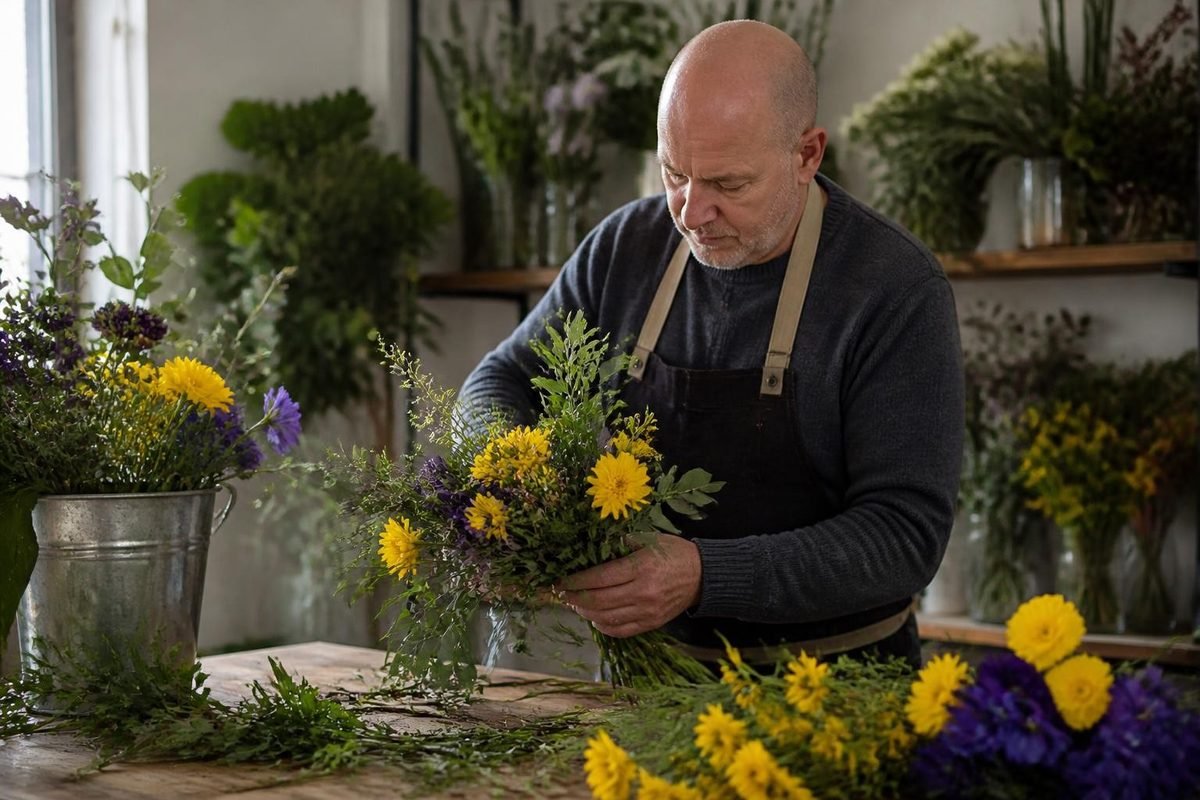
Florists use color theory to choose flowers and foliage that look balanced together and suit the person celebrating a birthday. They may combine related colors for a calm effect, use contrasting colors for impact, or build an arrangement around one favorite shade.
How color combinations work
The color wheel gives florists a way to see relationships between colors. Colors next to each other, such as pink, red, and orange, share some visual qualities and can create a flowing arrangement. The flowers need not match exactly. Different shades and textures keep a close color scheme from looking flat.
Colors on opposite sides of the wheel create stronger contrast. Purple flowers beside yellow ones, for example, tend to stand out against each other. A florist might use one color as the main focus and add a smaller amount of the other, so the arrangement has a clear center of attention.
A single color can also carry a bouquet. Pale pink, medium pink, and deep pink flowers provide variety while keeping the overall look unified. Green foliage adds another color, but it can also give the eye a place to rest.
Choosing a mood and a focus
Color can suggest a mood, although people do not all respond to it in the same way. Bright yellow and orange can make an arrangement feel lively. Soft pink, pale peach, and cream can give it a quieter appearance. Deep red, purple, and burgundy often give a bouquet a richer look.
Florists also consider saturation and lightness. A vivid purple has more visual punch than a muted lavender. White or pale flowers can lighten a group of dark blooms, while a few darker flowers can add depth to a mostly pale arrangement.
Color choices often start with practical details:
- The recipient's favorite colors or colors they tend to wear
- The setting, such as a bright party table or a quiet room
- The desired effect, from subtle and soft to bold and energetic
- The flowers available and the natural shades they come in
Balancing flowers, foliage, and wrapping
A florist looks at the whole arrangement, not just individual blooms. Large flowers can make a color dominant, while small flowers can repeat a shade throughout the design. Spreading accents across the bouquet helps the colors feel connected rather than isolated in one spot.
Foliage can soften a sharp contrast or frame the flowers. The container and wrapping matter too. A neutral vase or plain paper lets the flower colors take the lead, while a colored container becomes part of the palette.
Natural flowers vary in shade, even within the same variety. That variation can make a color scheme feel more relaxed. It also means an exact match to a ribbon, dress, or party decoration may not always be possible.
Common questions
Should a birthday bouquet match the party colors?
It can, especially if it will sit on a party table. For a personal gift, the recipient's preferences may be a better guide.
Do flower colors have fixed meanings?
No. Colors can carry different associations for different people and cultures, so it is sensible to ask if a particular color matters.
Can several bright colors work together?
Yes. Repeating each color and leaving room for foliage can help a lively mix look balanced.
You may also like what seasonal flowers means